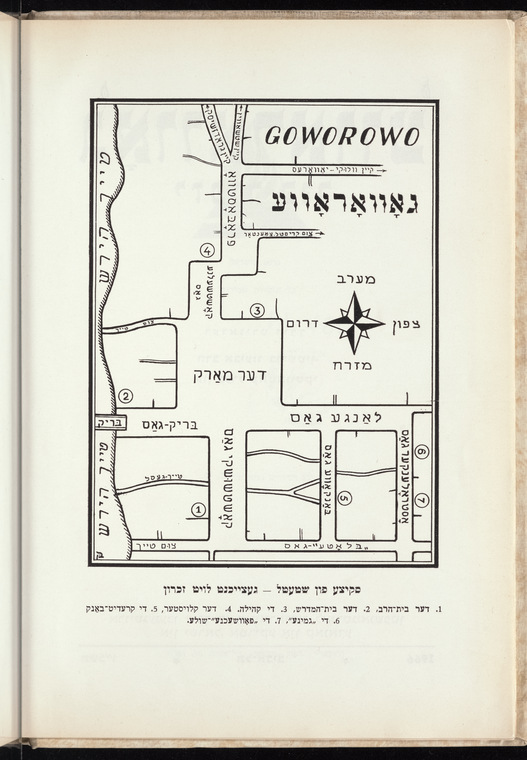
I was born on September 2, 1920 in our family home on Bankova Street in Govorova, a shtetl located northeast of Warsaw, Poland, alongside the railway that runs northeastward from Warsaw to Lomza. There were 200 Jewish families in Govorova, comprising about 2,000 souls.
Goworowo is shown here in relation to Warsaw and Bialystok.
In 1920, the region fell within the Second Republic of Poland, established at the end of World War I. A 1921 census counts a population of 27.2 million, including more than 2.7 million Jews.
When I started interviewing Grandpa in late 2009, I wanted to fill in the blanks in the short manuscript he’d created late in the 2000s. Naturally, we began at the beginning, where his manuscript picks up.
I had just started working at a political news magazine, and I was watching and learning from the writers and editors with my own high hopes of journalism. While an office job wasn’t where I’d hoped to end up, I was optimistic that I’d have a role in documenting history via news, hopefully finding opportunities to report accurately about the Israeli-Palestinian conflict, which I’d studied closely since late 2000.
Naturally, I felt myself a seasoned reporter stepping into a consequential interview as we began with his birthday, which, he explained, was invented on the spot while speaking to U.S. immigration officials at the displaced persons camp in Feldafing, Germany. It was never clear why he couldn’t use his actual birthday, or whether a definitive birth date had been lost.
It seemed that he may have been unclear on the actual year, likely remembering only “Asara b’Tevet,” the tenth day of the Hebrew month of Tevet, which indeed corresponds to Sep. 20, 1920. The Hebrew date is one of four minor fasting holidays, this one mourning the siege of Jerusalem by the Babylonian King Nebuchadnezzar in 588 BCE.
The uncertainty highlights an easily overlooked aspect of survivors’ lives: the total loss of pre-war information: records, dates, lineages, photographs, medical histories, contracts, bills of sale, any identifying documents, leaving a vast emptiness filled by memories after years under duress.
For Grandpa, Govorovo was a small village of Jews and Christians, where people were generally kind and the priest and rabbi were friendly. In the Govorovo yizkor book, a story is told:
At that time the Bolsheviks arrested the Christian parish priest Goszczicki, nephew of Cardinal Kokowski of Warsaw. The leaders of the Poles turned to Rabbi Burshtin to intervene with the Jewish Bolshevik commissar on the priest’s behalf. The intervention helped and the priest was freed. As an expression of thanks the priest sent the Rabbi a cordial letter with an solemn promise never to forget this deed. A short time later the priest was again arrested and the Poles turned once more to the rabbi for his intervention. This time however the rabbi had himself been arrested and sent with the prisoner convoy to Rozan fortress. The accusation carried with it the death penalty. As the rabbi sat in sadness in the detention center, reciting psalms in a loud voice, a Jewish officer came and said to him: Rabbi, we are quite a large group of Jewish soldiers and we will lie down under the horses if they try to take the rabbi from here to be shot. That same evening the door of the detention center opened and a quiet voice whispered from without: Rabbi, door and gate are open, flee! And in this way the rabbi was saved from certain death.
When the Polish forces took power there were pogroms against the Jews throughout the region. In Goworowo too the peasants gathered in the market place and armed themselves with axes and sticks. Then the parish priest appeared before the masses in his holy garments and said to the peasants, “Brothers! No Jew will be beaten in this town.” The crowd dispersed and thus a pogrom against the Jews was averted in Goworowo.
It adds later:
Goworowo was a beautiful, peaceful, cordial town, full of life and Jewish charm. Strong invisible threads of love and respect tied the Jews of Goworowo to the town of their birth. Even those whom fate has driven abroad, across seas and wildernesses, have not cut the threads and have not been able to erase from their memories the place where their cradles stood, where they took the first steps in their lives.
From Govorovo Yizkor Book at JewishGen.com.
The weather was “similar to Staten Island,” where Grandpa would live many decades later, with older buildings made of wood and newer ones of brick. The town gathered at a farmer’s market on Thursdays, where a multitude of booths featured shoemakers, tailors, and various food suppliers with grain, wheat, and flax seed that “looked like vansin (bedbugs),” he laughed.
Grandpa’s father, Ben-tzion, bought flax seed to sell to shippers, a distributorship that provided weekly income, and likely where Grandpa learned the trade that would define his business many years later in New York and then New Jersey. The shtetl economy meant steady demand, and investment on the supply side wouldn’t find itself without a market, barring anything unforeseen.